
We provide a flexible, evidence-based outpatient treatment approach focused on improving client outcomes and social determinants of health needs through dual recovery therapy, structured substance use and behavioral health interventions, community and resource linkages, and the hands-on care of a MISSION team.

MISSION — Maintaining Independence and Sobriety through Systems Integration, Outreach, and Networking — wraps three core evidence-based components around each client to treat co-occurring mental health and substance use disorders together.
A three-stage intervention — transition to community, tryout, and transfer of care — designed to facilitate linkages to, and improve engagement with, mainstream and community-based treatment providers.
A structured 13-session approach that blends and modifies traditional addiction treatment therapies with mental health approaches such as cognitive-behavioral therapy, motivational enhancement, and social skills training.
Personal, intensive support from someone with lived experience of mental health and/or substance use disorders — including 11 structured sessions and workbook facilitation — to engage participants and strengthen the other components.
The National Institutes of Health published an article calling MISSION “A Whole Health Approach for Treating Opioid Addiction and Mental Illness.” HEAL funding is determining which pieces of the multicomponent MISSION model are effective on their own or paired in ways that may be more accessible and affordable for real-world use.
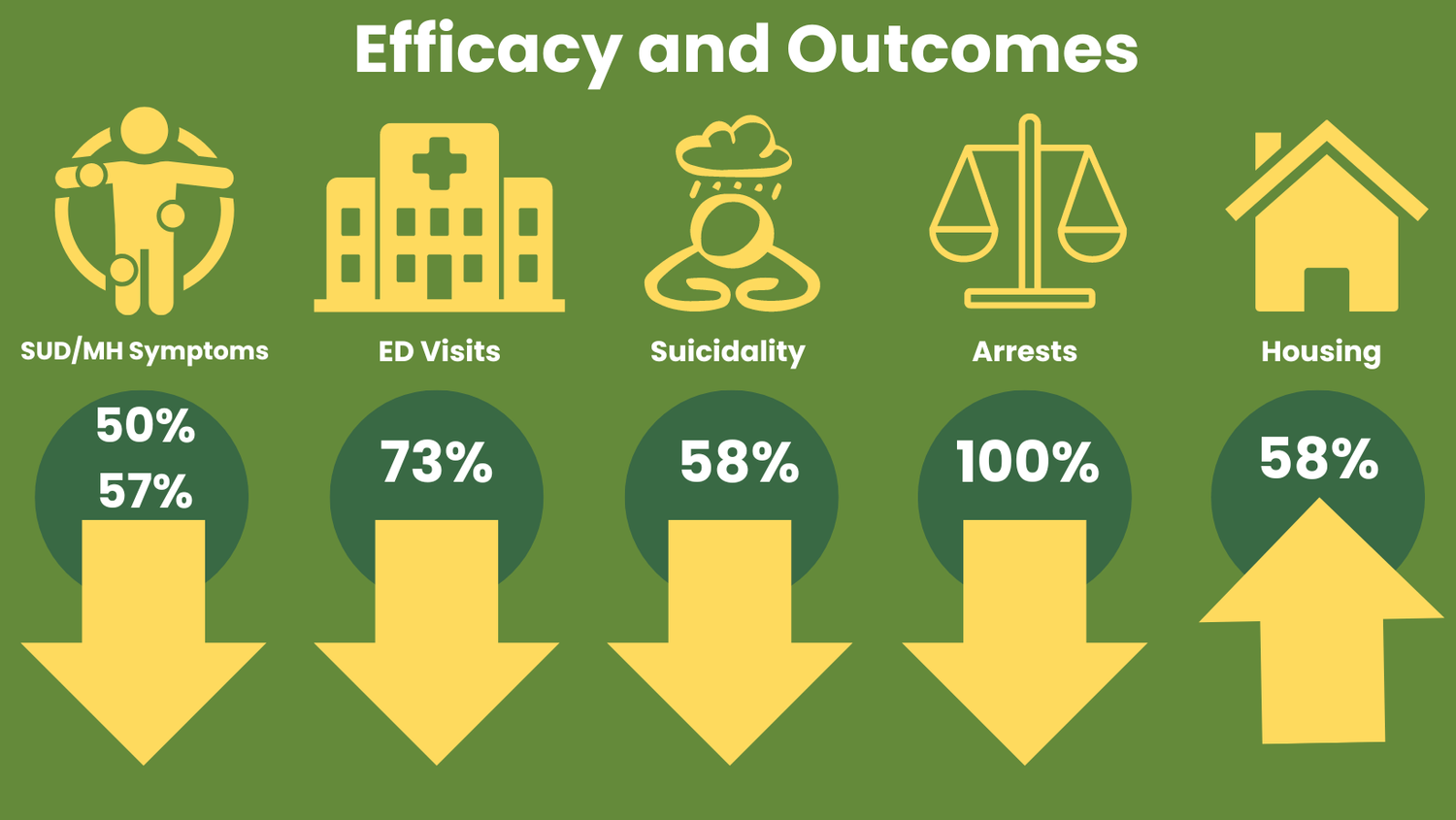
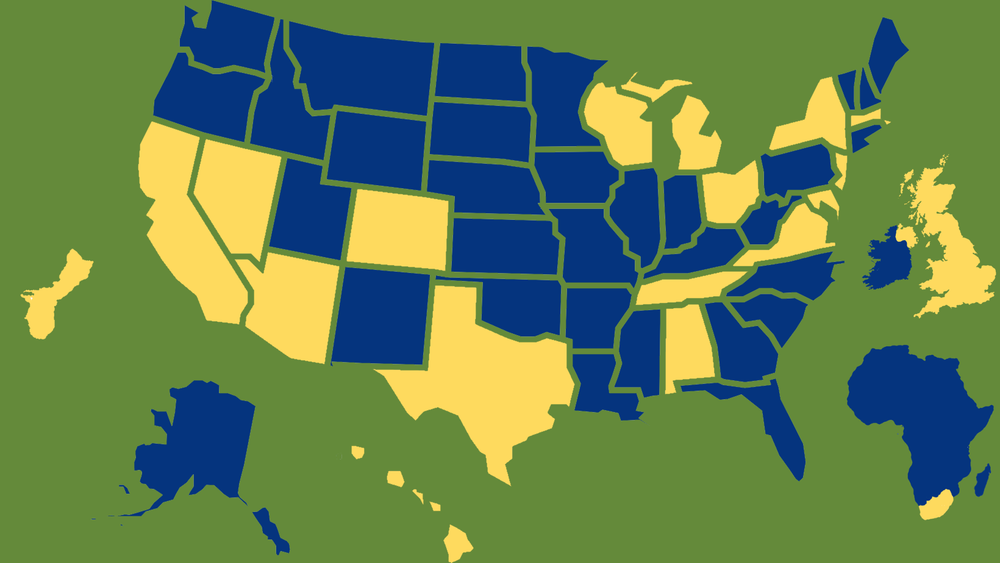
MISSION services have been implemented in 16 U.S. states — including Massachusetts, New York, California, Texas, Michigan, and Hawai‘i. Internationally, MISSION has been implemented in Guam, the United Kingdom, and South Africa.
The model adapts to veterans, the justice system, families, and homeless populations through dedicated versions like MISSION-Vet, MISSION-Criminal Justice, and MISSION-Hope.
Practical, real-world resources informed by deep clinical and billing expertise — built to help providers deliver and sustain MISSION services.
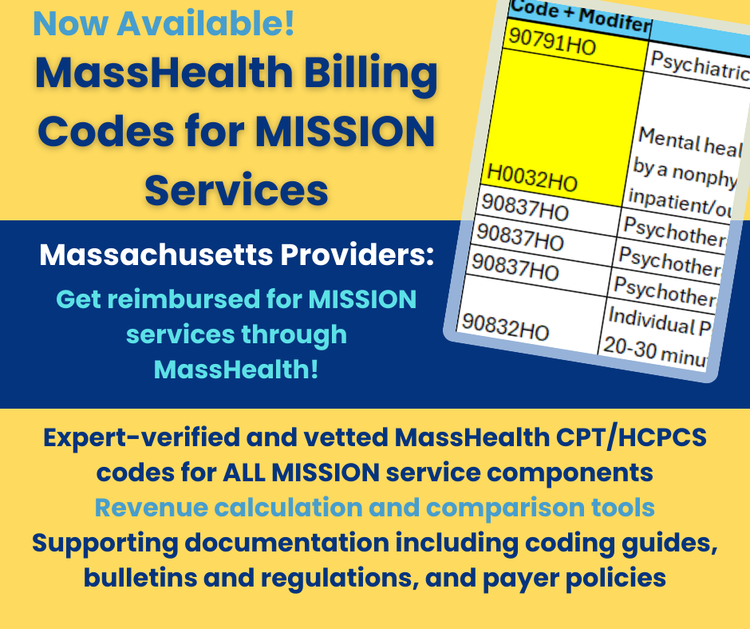
All the relevant MassHealth billing codes, service descriptions, duration guidance, unit rates, and modifiers needed to get reimbursed for MISSION services — plus a tool for modeling services and revenue. A must-have, free resource for Massachusetts providers.
Download the toolkit →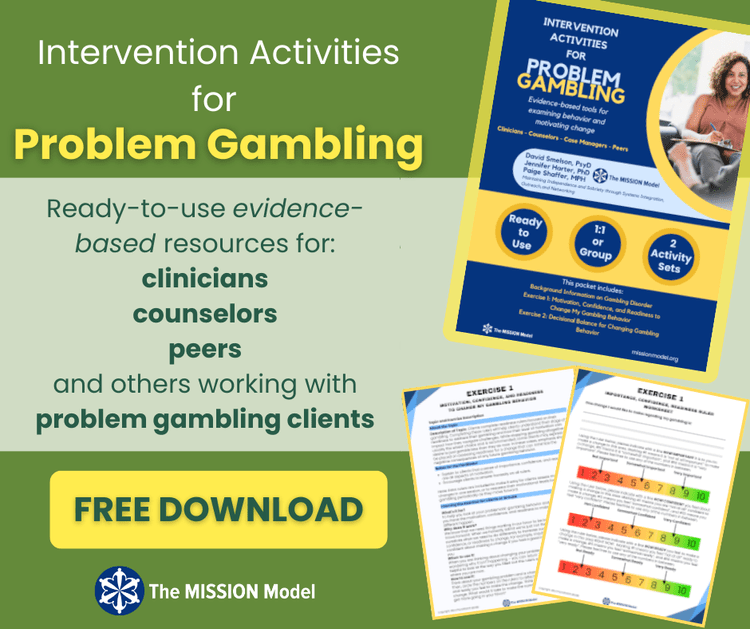
Two no-prep, ready-to-use tools for helping clients struggling with problem gambling examine their behavior and build motivation for change — including a readiness-to-change exercise and a decisional-balance worksheet.
Download the packet →Structured training and continuing education for providers implementing the MISSION model.
The foundational training every provider completes before delivering MISSION services in the field.
Start required training →Deeper clinical sessions covering co-occurring disorders, dual recovery therapy, and specialized adaptations.
Explore the clinical series →The Psychiatric Rehabilitation Association's certificate-bearing, seven-module MISSION Training Series, taught by the model's developers.
View the training series →
MISSION founder David Smelson, Psy.D. was recognized with a 2024 NIH HEAL Initiative Award for Mentorship.
Read the full article →
A remarkable story set against the backdrop of the opioid and overdose crisis in central Massachusetts — and the role MISSION played in meeting unmet needs.
Read the full article →The NIH explores whether parts of the multicomponent MISSION model are effective on their own — or paired in ways that are more accessible and affordable for real-world use.
Read the full article →Interested in implementing MISSION, billing for services, or partnering on research? Our team will help you get started.